
Hidden Travel Gems in Himachal You Must Visit
Himachal Pradesh is famous for Manali, Shimla, and Dharamshala — but beyond those popular stops lies a quieter, more soulful Himachal filled with remote villages, secret valleys, ancient monasteries, and raw landscapes. These hidden gems are perfect if you want solitude, nature, culture, and real local life rather than crowded viewpoints and tourist traps.
Below you’ll find a carefully chosen list of offbeat places across Himachal, practical details (how to reach, where to stay, best time), sample itineraries, photography tips, budget guidance, and safety / connectivity notes so you can actually plan and enjoy the trip.
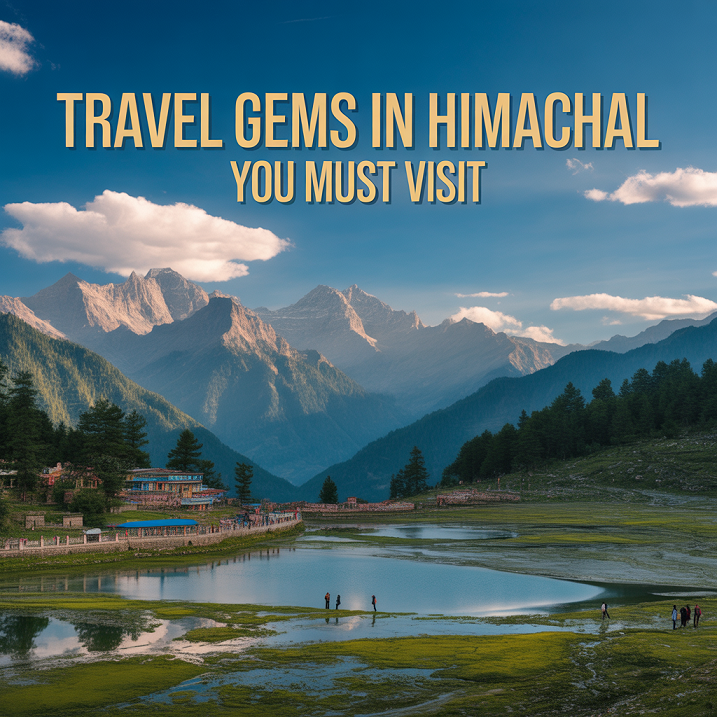
Why explore Himachal’s hidden gems?
- Less crowd, more atmosphere: You get the mountain silence and local warmth.
- Authentic experiences: Family-run homestays, traditional food, local festivals.
- Unique landscapes: High-altitude deserts, river valleys, dense cedar forests, apple orchards.
- Adventure & serenity together: Trekking and camping by day, stargazing by night.
Top Hidden Gems
1. Chitkul — The Last Inhabited Village on Old Hindustan-Tibet Road
Why go: Tiny hamlet at the end of the road, pristine Baspa River, stone houses and Himalayan views.
How to reach: Drive from Sangla (approx 22 km). Best reached via Shimla → Sangla route or via Kinnaur Circuit.
Best time: May–October (road often closed in winter).
What to do: Riverside walks, short hikes to nearby shepherd huts, sunrise photography.
Stay: Simple homestays or guesthouses in Chitkul / Sangla (book early in peak season).
Tip: Phone network is patchy; bring cash and warm clothes for nights.
2. Tirthan Valley — Quiet River Valley & Great Base for Treks
Why go: River Tirthan, trout fishing, remote trails, Great Himalayan National Park gateway.
How to reach: Drive from Aut (Bhuntar side) or take bus/taxi from Shimla/Aut.
Best time: March–June, Sep–Nov. Monsoon brings lush green but watch for landslides.
What to do: Trout fishing, trek to Serolsar Lake, visit Great Himalayan National Park for biodiversity.
Stay: Eco-lodges and riverside homestays (many run by local families).
Real note: Food is simple and fresh — try locally-caught trout cooked on open flame.
3. Barot Valley — Hidden Haven for Slow Travel
Why go: Lush green valley, meandering river, trout farm, quiet camps.
How to reach: Drive from Mandi (approx 70 km) or take toy train/taxi options via Joginder Nagar.
Best time: April–October. Winter gets heavy snow in higher spots.
What to do: Walks to Choor Chandni waterfall, Baijnath temples nearby, fishing and riverside picnics.
Stay: Forest rest houses, homestays, riverside camps.
4. Spiti Valley (off-mainstream routes) — Remote, Dramatic & otherworldly
Why go: High-altitude desert, ancient monasteries, lunar landscapes. Avoid peak-mobility routes and aim for lesser-known villages (e.g., Dhankar, Tabo circuit).
How to reach: Road from Manali via Rohtang (summer) or via Shimla-Kaza (more stable). High-clearance vehicle recommended.
Best time: June–September. Roads closed or dangerous in winter.
What to do: Visit Dhankar Monastery, Sangam spots, small village walks, homestay meals with locals.
Stay: Simple guesthouses in Kaza, homestays in village clusters.
5. Kaza Surrounds — Chandratal outskirts & Quiet Villages
Why go: Chasing reflections at high-altitude lakes and staying in remote Tibetan-buddhist villages.
How to reach: From Manali via Kunzum / Rohtang pass (summer) or via Shimla route (longer).
What to do: Day trip to Chandra Tal (permits & jeep required), visit Kibber/Komik villages, simple mountain walks.
Photography tip: Golden hour reflections at Chandra Tal; star trails at night.
6. Kasol – Tosh – Grahan — The Parvati Valley Alternate Vibe
Why go: While Kasol is known, trek deeper to Tosh and Grahan for quiet cafes, small waterfalls, and traditional Himachali vibes.
How to reach: Road from Bhuntar (Kullu), frequent buses/taxis to Barshaini; short trek to Tosh/Grahan.
Best time: March–June, Sep–Nov. Tosh can be cold in winter.
What to do: Short treks to Kheerganga (crowded) — instead pick lesser trails; stay in family-run cafes, taste Israeli-influenced food in Kasol.
Stay: Homestays and boutique cafes with rooms.
7. Kinnaur (Kalpa & Sangla) — Apple Terraces & Kinner Kailash Views
Why go: Terraced orchards, ancient temples, and dramatic mountain backdrops. Kalpa offers clear views of Kinner Kailash on good days.
How to reach: Drive from Shimla via NH5 towards Reckong Peo and then Kalpa/Sangla.
Best time: May–October. Apple season (Aug–Oct) is colorful and delicious.
What to do: Walk through orchards, visit the village temples, try local Kinnauri food.
Stay: Family-run guesthouses with local cuisine.
Suggested 5–7 Day Sample Itinerary (Slow & Real)
Day 1 — Shimla → Ramp up to Kinnaur / Reckong Peo
- Morning: Train/drive to Shimla and continue to Reckong Peo.
- Afternoon: Short walk in apple orchards.
- Night: Local Kinnauri meal and sleep early.
Day 2 — Sangla → Chitkul (overnight Chitkul)
- Morning: Drive to Sangla; lunch in Baspa valley.
- Evening: Walk to Chitkul riverside and camp or homestay.
Day 3 — Drive to Tirthan Valley
- Morning: Early drive to Tirthan (longish drive).
- Afternoon: Riverside walk, check into homestay.
Day 4 — Tirthan: Great Himalayan National Park visit
- Day hike, wildlife spotting (if lucky), trout meal by the river.
Day 5 — Barot & Mandi region
- Transfer to Barot, explore waterfall & quiet valley.
- Overnight in forest guesthouse.
Day 6 — Drive back to Shimla / Delhi or extend to Spiti via Manali (seasonal)
Budget & Practical Costs (Per Person for 6 days, conservative estimate)
- Transport (shared taxi / local hires): ₹5,000–9,000
- Accommodation (homestay mid-range): ₹800–1,800/night → ₹5,000–10,000 total
- Food: ₹300–700/day → ₹2,000–4,000
- Permits / entry / driver allowances: ₹500–1,500
- Misc/Buffer: ₹1,000–2,000
Total (approx.): ₹13,500 – ₹26,500 per person (depends on vehicle sharing and season)
Photography & Content Tips
- Shot ideas: riverside reflections (morning), apple terraces (golden hour), villagers & markets for portraiture (ask permission), star trails (clear nights).
- Gear: wide-angle lens for landscapes, 50mm for portraits, tripod for low light / stars. Phone cameras work well; use HDR and RAW (if available).
- Image captions: Add small stories — “Grandma Rupi making thukpa — her recipe goes back three generations.” That human detail sells clicks.
Connectivity & Safety Notes
- Network: Very patchy in Chitkul, Spiti, and interior valleys. Don’t rely on Google Maps exclusively.
- Cash: Carry sufficient cash; ATMs are scarce in offbeat places.
- Altitude sickness: In Spiti regions, acclimatize. Symptoms: headache, nausea, fatigue. Stay hydrated and ascend slowly.
- Roads: Expect single-lane mountain roads, landslide-prone sections during monsoon. Hire local drivers who know routes.
- Respect local customs: Dress modestly in villages, ask before photographing people or religious sites.
Where to Stay (Real options)
- Homestays: Best for authentic food and cultural exchange — e.g., Sangla homestays, Tirthan riverside cottages.
- Forest rest houses / guesthouses: Barot & Tirthan have forest guesthouses that are simple but comfortable.
- Boutique eco-lodges: Small eco-lodges near Spiti / Kinnaur offering sustainable stays.
Food & Drink — What to Expect
- Local Himachali dishes: Sidu, chha gosht, thukpa, dal-chawal with ghee.
- Fresh trout in Tirthan and Barot — often cooked on open flame.
- Beverages: Herbal teas, butter tea in high-altitude regions, local home-made chutneys and pickles.
FAQs
Q: How many days are enough to explore these hidden gems?
A: To visit 2–3 offbeat places comfortably, plan 5–7 days. For Spiti or combined Kinnaur+Spiti, allow 10–12 days.
Q: Are homestays safe for solo female travelers?
A: Yes — many homestays are family-run and welcoming. Still, choose verified hosts and read reviews.
Q: Is it okay to drive a personal car?
A: You can, but high-clearance vehicles are recommended for Spiti and some Kinnaur stretches. For narrow mountain roads, hiring a local driver is safer.
Q: Do I need permits?
A: Some high-altitude areas require permits (Rohtang/Restricted zones). Check local administration websites before travel.
Sensory Mini-Notes
- Tirthan: The river’s voice — soft, constant, carrying stories downstream.
- Chitkul: The cold bite in morning air, and the quiet crunch as you step on frost.
- Barot: The scent of wet earth after afternoon rain, the green so deep it feels like a soft carpet.
Quick Packing Checklist (offbeat Himachal)
- Warm thermal layers + water/windproof jacket
- Good trekking shoes + extra socks
- Basic medical kit + altitude meds (if needed)
- Power bank + flashlight
- Reusable water bottle + water purification tablets
- Local cash & photocopies of permit/ID
Disclaimer
This guide is for informational purposes. Road conditions, permits, weather, and local services can change quickly in Himalayan regions. Always verify current information from local authorities or trusted travel partners before you travel. The author and Blogshub are not responsible for any inconvenience, loss, or injury incurred during travel.
Happy Journey 🙂